


Virtual Commissioning
Validating Automation Systems Before Physical Startup
Successful commissioning begins long before equipment arrives on the production floor. Decisions made during the engineering phase directly influence startup performance, project schedules, and long-term operational reliability.
In conventional project execution, many control system issues become visible only after installation begins. Software errors, sequence conflicts, communication failures, and equipment integration problems can extend commissioning activities, increase project costs, and introduce unnecessary technical risks.
Virtual Commissioning provides an engineering-based approach to addressing these challenges. By validating automation systems within a realistic digital environment before physical implementation, potential issues can be identified, evaluated, and resolved while design modifications remain efficient and cost-effective.
The result is a more predictable commissioning process, reduced onsite troubleshooting, and greater confidence throughout project execution.
Bridging Engineering and Production
Virtual Commissioning establishes a direct connection between engineering design and physical production by creating a digital representation of the manufacturing system.
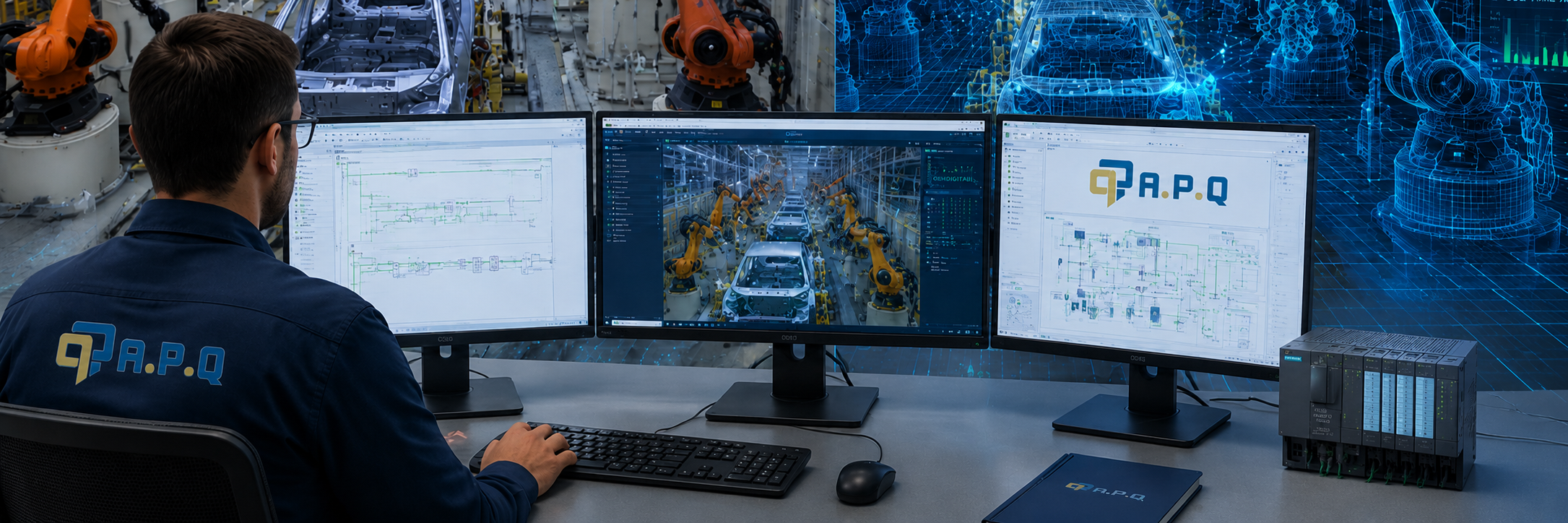
Using detailed three-dimensional production models developed in CATIA and integrated into Siemens Process Simulate, our engineers recreate manufacturing processes within a virtual environment that accurately represents equipment behavior, robotic operations, material flow, and control system interactions.
This digital engineering workflow enables production scenarios to be evaluated before installation begins, allowing automation strategies, equipment coordination, and process sequences to be verified under realistic operating conditions.
By resolving engineering issues early in the project lifecycle, physical commissioning becomes more structured, efficient, and predictable.
PLC Software Validation
Reliable automation depends on reliable control software.
Virtual Commissioning enables actual PLC programs to be connected to a simulated production environment where control logic can be verified before equipment is installed on site.
Validation activities typically include:
- PLC Logic Verification
- Operational Sequence Validation
- Interlock Verification
- Functional Safety Logic Validation
- Industrial Communication Verification
- Alarm and Fault Response Testing
- Startup and Shutdown Sequence Validation
- Equipment Interaction Analysis
- Control System Integration Verification
Testing automation software within a virtual production environment allows programming issues, sequence inconsistencies, and system interactions to be identified early, reducing commissioning effort while improving software quality before physical startup.
Robotic and Equipment Simulation
Modern manufacturing systems depend on the coordinated operation of robots, automated equipment, tooling, sensors, and control systems. Even minor inconsistencies between these elements can affect production efficiency and increase commissioning time.
Virtual Commissioning provides a practical environment for evaluating these interactions before physical integration takes place.
Simulation capabilities include:
- Robotic Process Validation
- Equipment Behavior Simulation
- Motion Sequence Verification
- Collision Detection
- Material Flow Analysis
- Human–Machine Interface Validation
- Process Sequence Evaluation
- System Integration Verification
Evaluating system behavior in a virtual environment helps identify potential mechanical, logical, and operational issues before installation, reducing the need for corrective modifications during commissioning.
Engineering Confidence Before Startup
Virtual Commissioning is not intended to replace physical commissioning; it enhances it by reducing uncertainty before equipment reaches the production floor.
By validating automation logic, equipment interaction, and production sequences during the engineering phase, project teams can approach installation and startup with a higher level of preparation and confidence.
The outcome is a commissioning process that is more efficient, more predictable, and better aligned with the project's technical and operational objectives.