


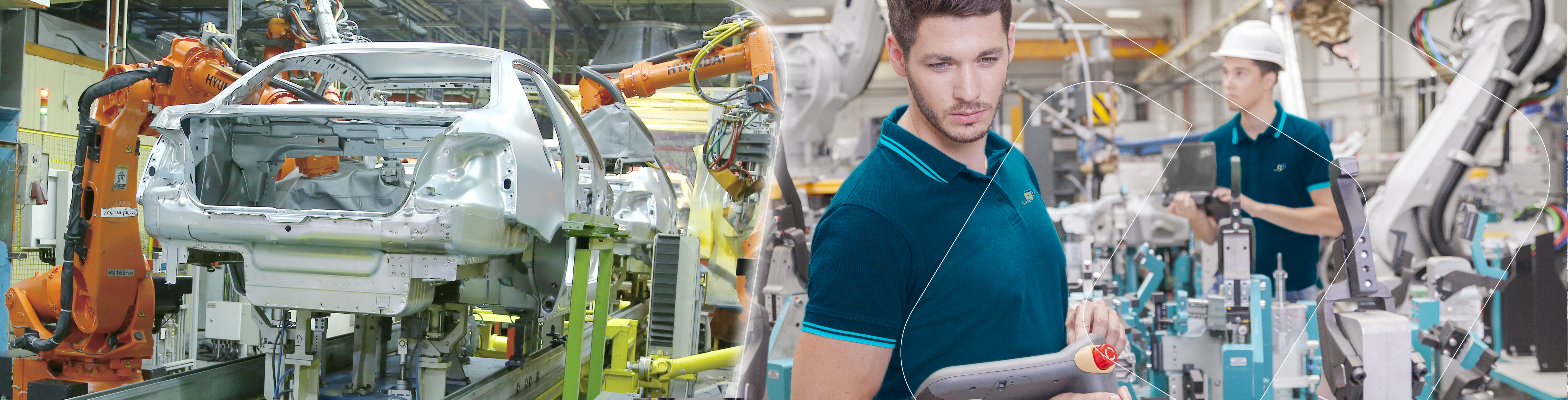
Installation Commissioning and Programming
Robot Installation & Commissioning
The successful implementation of a robotic automation system depends not only on sound engineering and system design, but also on well-planned installation, systematic commissioning, and a controlled transition into production.
Our engineering teams support customers throughout the final stages of project execution, ensuring that robotic systems are installed, validated, and brought into operation safely, efficiently, and according to project objectives. Every commissioning activity is performed using a structured engineering approach that emphasizes technical verification, operational reliability, and production readiness.
Installation Activities
Installation represents the transition from engineering design to physical implementation. Proper execution during this stage establishes the foundation for safe operation, efficient commissioning, and long-term system reliability.
Typical installation activities include:
- Mechanical assembly of robotic cells and production equipment
- Robot installation and positioning
- Integration of tooling, fixtures, and peripheral equipment
- Field wiring verification
- Utility and infrastructure coordination
- Safety system installation and verification
- Mechanical alignment and equipment inspection
- Preparation for commissioning activities
Each installation phase is carried out in accordance with project documentation, engineering specifications, and customer production requirements.
Commissioning Activities
Commissioning verifies that all mechanical, electrical, control, and robotic systems function together as an integrated production solution.
Typical commissioning activities include:
- Robot program verification
- PLC and robot controller integration
- Industrial network and communication testing
- Process sequence validation
- I/O verification
- Motion testing and robot calibration
- Safety system validation
- Cycle time verification and optimization
- Production process validation
- System performance verification
The objective of commissioning is to confirm that every subsystem operates reliably, safely, and consistently before production begins.
Site Acceptance Testing (SAT)
Following commissioning, Site Acceptance Testing provides formal verification that the installed system satisfies the agreed technical and operational requirements.
SAT typically includes functional testing, safety validation, production sequence verification, performance evaluation, and demonstration of system operation under production conditions. This process confirms that the complete automation system is ready for production use and complies with customer specifications.
Production Ramp-Up Support
The transition from commissioning to stable production requires continuous engineering support to ensure consistent manufacturing performance.
During production ramp-up, engineering teams monitor system behavior, optimize robot programs, refine process parameters, resolve operational issues, and support production personnel. This stage focuses on achieving stable cycle times, repeatable product quality, and reliable production output while minimizing unplanned downtime.
Engineering Continuity
One of the key advantages of our engineering approach is the continuity maintained throughout the entire project lifecycle.
Most commissioning activities are performed on robotic cells and automation systems that have been engineered, simulated, programmed, and integrated by our own engineering teams. Because the same engineering knowledge is carried from concept development through installation and commissioning, technical decisions remain consistent throughout every stage of the project.
This continuity enables potential issues to be identified earlier, simplifies technical problem solving, improves communication between engineering disciplines, and contributes to more efficient project execution.
Benefits of Integrated Installation & Commissioning
A structured installation and commissioning methodology provides significant technical and operational advantages, including:
- Reduced project implementation risk
- Faster commissioning and production start-up
- Improved system reliability
- More efficient technical troubleshooting
- Optimized production performance
- Reduced on-site engineering time
- Improved long-term system maintainability
- Reliable transition into stable production
Engineering Services
Depending on project requirements, our engineering services may include:
- Robot installation supervision
- Mechanical installation support
- Tooling and peripheral equipment integration
- Electrical and field wiring verification
- Robot commissioning
- PLC and control system integration
- Robot program validation
- Safety system verification
- Process validation
- Cycle time optimization
- Site Acceptance Testing (SAT)
- Production ramp-up support
- Engineering support for production line modifications and system upgrades
Each project is executed according to its specific technical objectives, production requirements, and operational constraints. Engineering activities are based on practical manufacturing experience, structured commissioning procedures, and systematic technical validation to support safe, reliable, and efficient production system implementation.
Engineering Partnership
Successful commissioning is the result of engineering preparation long before equipment arrives on site. Installation, commissioning, validation, and production ramp-up are therefore treated as connected phases of a single engineering process rather than independent activities.
Our approach combines practical manufacturing experience with structured engineering methodologies to ensure that robotic systems are installed efficiently, commissioned systematically, and transitioned into stable production with confidence. By maintaining technical continuity throughout the project lifecycle, we help customers reduce implementation risk, improve execution efficiency, and establish reliable manufacturing performance from installation through long-term production operation.