


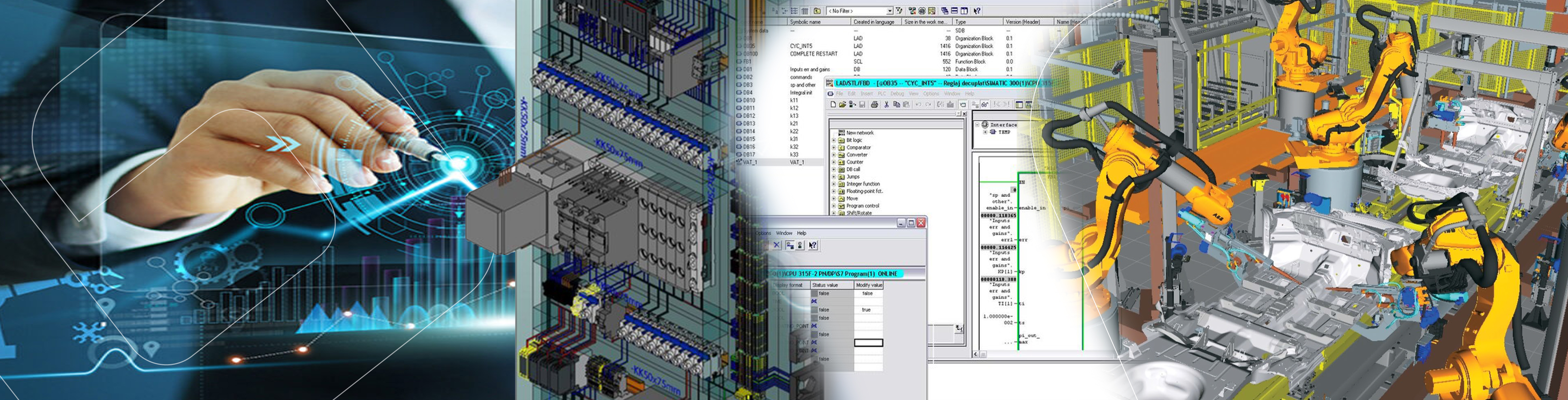
Engineering
Automation Engineering
Industrial automation begins with engineering. Reliable, efficient, and scalable automation solutions are built upon a thorough understanding of industrial processes, operational requirements, control philosophies, and system architecture. Whether supporting manufacturing facilities or rail transportation systems, successful projects depend on structured engineering that transforms operational requirements into reliable, maintainable, and future-ready automation solutions.
With more than 20 years of experience in industrial automation, our engineering team has developed control solutions for a broad range of industrial applications, including automotive manufacturing, steel production, copper processing, water and wastewater treatment, and oil & gas facilities. Building on this engineering foundation, the department has also expanded its capabilities to support automation solutions for rail transportation systems, applying the same structured engineering principles across diverse industrial environments.
Engineering Methodology
Every automation project begins with a thorough evaluation of process requirements, operational objectives, and system constraints. These requirements are translated into structured automation concepts that define how equipment, software, communication networks, and operators interact throughout the production process.
The engineering methodology focuses on developing control systems that are technically consistent, maintainable, and adaptable to future operational requirements. Particular attention is given to software structure, system integration, process sequencing, diagnostics, and long-term maintainability.
Control System Architecture
A well-defined control architecture forms the basis of every automation solution. The engineering process establishes a structured framework that supports reliable operation, clear system organization, and efficient project execution.
Engineering activities include:
- Automation system architecture
- Control philosophy development
- Functional specifications
- Industrial communication network design
- Safety system engineering
- Equipment integration planning
- Process control strategy
- Technical documentation
Each control system is developed according to project-specific process requirements while following established engineering practices and applicable industrial standards.
PLC Software Engineering
PLC software provides the core functionality of industrial automation systems. Software development is carried out using structured programming methodologies that emphasize reliability, readability, maintainability, and operational consistency.
Engineering capabilities include:
- PLC software development
- Sequential control logic
- Process control algorithms
- Motion control integration
- Safety PLC programming
- Diagnostics and fault handling
- Production monitoring functions
- Software optimization
Engineering activities are primarily based on Siemens automation technologies while remaining adaptable to other industrial automation platforms when required by project specifications.
HMI & Operator Systems
Operator interfaces play an important role in the efficient operation of industrial facilities. HMI applications are designed to present process information in a clear and consistent manner, enabling operators to monitor production, respond to system events, and perform operational tasks efficiently.
Engineering services include:
- HMI application development
- Process visualization
- Alarm management
- Operator guidance
- Production monitoring
- Data acquisition interfaces
- Diagnostic functions
- Performance reporting
The objective is to provide operators with meaningful information that supports safe operation, efficient decision-making, and simplified maintenance activities.
Cross-Industry Engineering Experience
Engineering expertise has been developed through projects executed across a wide range of industrial sectors, including automotive manufacturing, steel production, copper processing, water and wastewater treatment, oil & gas facilities, and rail transportation systems.
Working across diverse industries provides valuable insight into different operational environments while enabling proven engineering methodologies to be adapted to the specific technical and operational requirements of each application.
Engineering Principles
Engineering decisions influence every stage of an automation project's lifecycle. For this reason, each solution is developed with careful consideration of operational performance, maintainability, system integration, and future expansion.
The engineering approach is based on:
- Process-oriented system design
- Structured and maintainable software development
- Reliable system integration
- Standardized engineering practices
- Long-term operational stability
- Lifecycle-oriented engineering
This methodology supports the development of automation systems that remain reliable, maintainable, and adaptable throughout their operational life.
From Engineering to Implementation
Automation engineering establishes the technical foundation of every project. Once engineering activities have been completed and validated, the developed solutions are transferred to the Implementation & Commissioning team for installation support, system commissioning, production startup, and operational verification, ensuring continuity from design through successful industrial operation.