


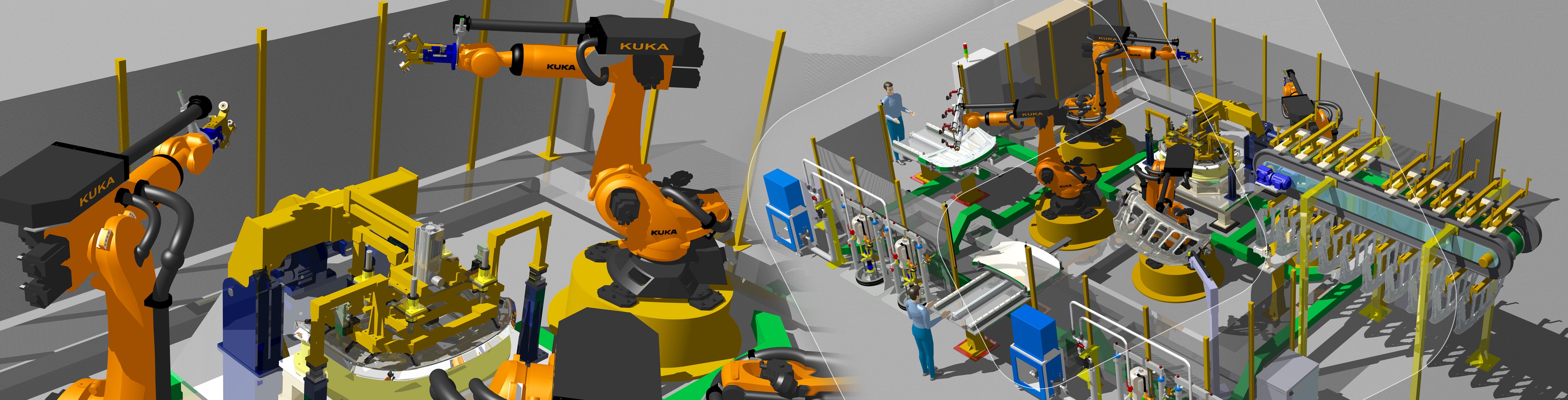
Simulation
Robotic Simulation & Offline Programming
Robotic simulation has become an essential engineering tool for the design, validation, and optimization of modern automated manufacturing systems. By creating an accurate digital representation of robotic cells and production processes, engineers can evaluate system performance, verify engineering decisions, and identify potential issues before physical equipment is manufactured or installed.
Far beyond visualization, simulation provides a reliable engineering environment for validating manufacturing concepts, evaluating alternative solutions, optimizing production processes, and reducing technical risk throughout the entire project lifecycle. Advanced simulation platforms accurately represent robot kinematics, tooling, fixtures, production equipment, material flow, and process interactions within realistic three-dimensional environments, enabling informed engineering decisions long before commissioning begins.
As manufacturing systems continue to evolve, robotic simulation has become an integral part of modern engineering workflows, supporting more efficient project planning, improved design quality, and predictable implementation.
Robotic Simulation Applications
Modern robotic simulation supports a broad range of engineering activities throughout the design, validation, and implementation phases of automation projects.
Typical simulation applications include:
- Robot reach and accessibility analysis
- Robot path planning and trajectory validation
- Cycle time analysis and production performance evaluation
- Collision detection and interference analysis
- Production layout verification
- Robotic cell process validation
- Offline robot programming
- Virtual commissioning support
- Production process optimization
- Evaluation of alternative manufacturing concepts
These capabilities enable engineering teams to compare different solutions, validate technical assumptions, identify potential issues at an early stage, and optimize system performance before manufacturing and installation activities begin.
Offline Robot Programming
Offline programming enables robot programs to be developed, tested, and optimized within the virtual environment without interrupting production or requiring physical access to robotic equipment.
Robot paths, process sequences, and motion parameters can be verified before deployment, allowing engineering activities to progress in parallel with equipment manufacturing and installation. This approach shortens commissioning time, improves program quality, and reduces the amount of on-site programming required during project execution.
Offline programming also provides an effective platform for validating process feasibility, optimizing robot motion, minimizing unnecessary movements, and confirming production readiness prior to downloading programs to robot controllers.
Benefits of Robotic Simulation
Digital simulation provides measurable technical and operational advantages throughout the development of robotic automation systems.
1. Optimized Robot Selection
Simulation verifies that selected robot models satisfy application requirements by evaluating payload capacity, working envelope, reach, motion characteristics, accessibility, and process constraints before equipment procurement.
2. Reduced Project Risk
Engineering conflicts and design issues can be identified during the virtual development phase, minimizing costly modifications during manufacturing, installation, and commissioning.
3. Faster Project Execution
Mechanical design, robot programming, and process validation can be developed simultaneously, reducing overall project duration and shortening production start-up.
4. Layout & Reach Validation
Simulation verifies the positioning of robots, fixtures, tooling, conveyors, and auxiliary equipment to ensure complete process coverage while avoiding accessibility limitations and unnecessary equipment relocation.
5. Process Optimization
Robot motions, workload distribution, production sequences, and cycle times can be analyzed and optimized before physical implementation, improving both productivity and manufacturing efficiency.
Engineering Workflow
Robotic simulation forms an integral part of the engineering workflow, connecting process planning, mechanical design, robot programming, and commissioning within a unified digital engineering environment.
Simulation models provide a practical platform for validating engineering assumptions, confirming process feasibility, and evaluating manufacturing concepts before physical implementation. This digital validation process improves project predictability, reduces engineering uncertainty, and supports informed technical decision-making throughout every stage of project development.
Simulation Software Platforms
Simulation activities are performed using industry-recognized engineering software platforms, including:
- DELMIA
- RoboDK
- Manufacturer-specific offline programming software
These tools support accurate robotic cell modeling, realistic robot motion simulation, process verification, offline programming, and engineering analysis across a wide range of industrial automation applications.
Engineering Services
Our engineering team provides robotic simulation and offline programming services that support the complete development cycle of automated manufacturing systems, from concept evaluation through production readiness.
Depending on project requirements, engineering services may include:
- Robotic cell simulation and digital process validation
- Robot reach and accessibility studies
- Production layout verification
- Robot path planning and motion optimization
- Cycle time analysis
- Collision detection and interference analysis
- Offline robot programming
- Robot program verification
- Process sequence validation
- Virtual commissioning support
- Manufacturing process optimization
- Feasibility studies for new automation concepts
- Simulation support for production line modifications and system upgrades
Each project is developed according to its specific technical objectives, production requirements, and operational constraints. Engineering solutions are based on practical manufacturing experience, sound engineering principles, and simulation-driven validation to support reliable and efficient project execution.
Experience Across Industries
Although a significant portion of engineering experience has been developed through automotive manufacturing and robotic body shop applications, the methodologies and engineering principles of robotic simulation are applicable across a wide range of industries.
Simulation and offline programming support projects involving:
- Automotive manufacturing
- Material handling systems
- Robotic assembly
- Spot and arc welding
- Machine tending
- Packaging systems
- Inspection and quality control
- Logistics automation
- General industrial manufacturing
This engineering methodology provides a flexible foundation for developing reliable, efficient, and scalable automation solutions for diverse manufacturing environments.
Engineering Partnership
Every manufacturing project presents its own technical objectives, production constraints, and engineering challenges. Successful automation therefore requires more than simulation software—it requires practical engineering judgment supported by reliable digital validation.
Our approach combines engineering experience with robotic simulation and offline programming technologies to evaluate manufacturing concepts, verify technical solutions, and support informed decision-making throughout project development. By identifying potential issues before implementation, simulation becomes a practical engineering resource that contributes to reduced project risk, improved execution efficiency, and reliable production performance from concept development through commissioning.